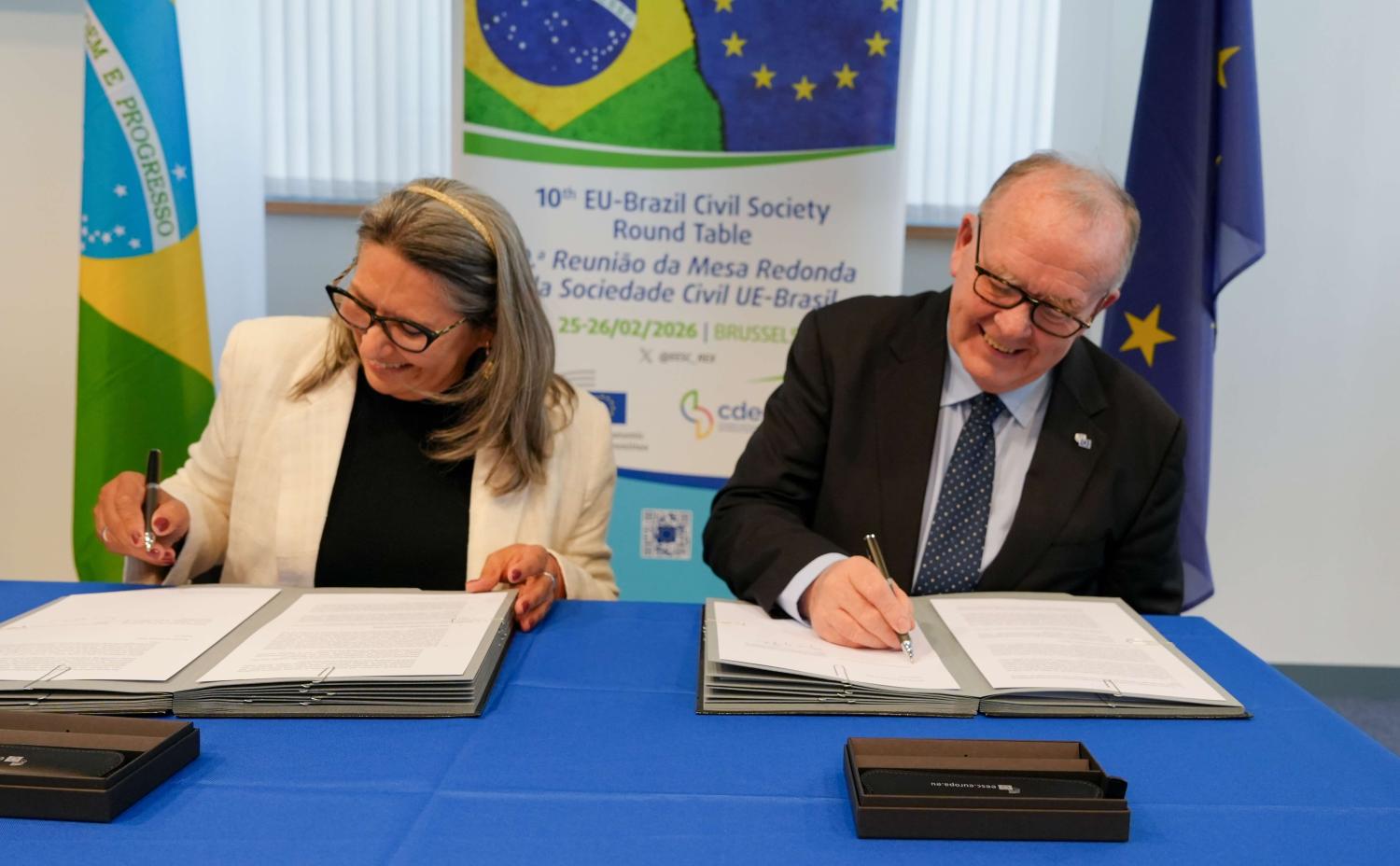
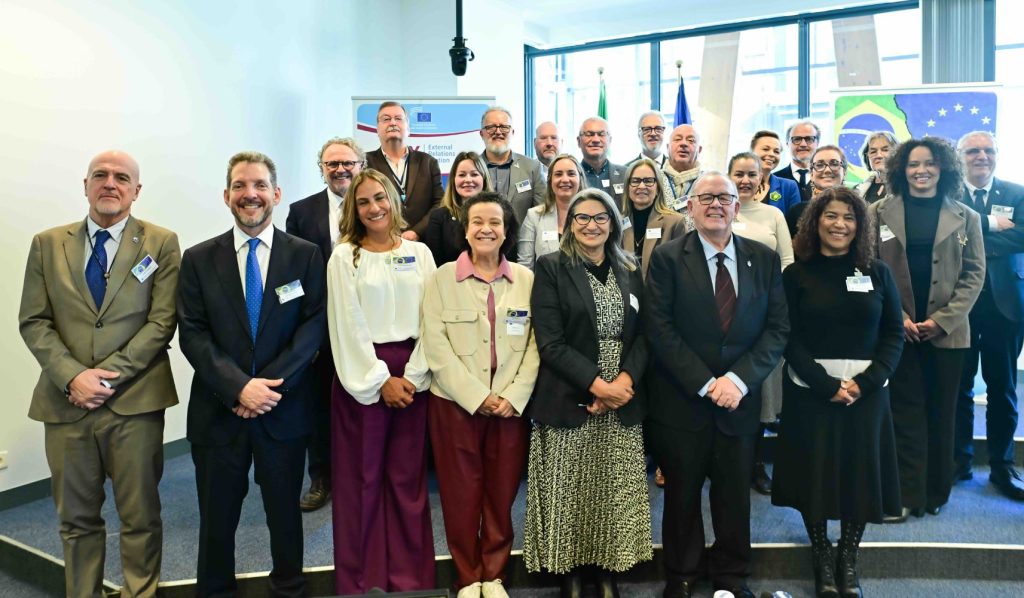
EU and Brazilian civil society representatives agreed to deepen cooperation around shared priorities during the 10th EU-Brazil Civil Society Round Table, held on 25-26 February 2026 at the European Economic and Social Committee (EESC) in Brussels. Co-organised by the EESC and Brazil’s Sustainable Economic and Social Development Council (CDESS), the meeting concluded with the signing of a Joint Declaration.
According to the EESC, the declaration reaffirmed the commitment of European and Brazilian civil society to democracy, human rights, multilateralism, sustainable development and climate action. Both sides also committed to working together to address key challenges and opportunities.
Democracy was one of the key themes of the round table. Participants stressed the importance of active civil society, media and citizens in ensuring transparency, inclusion and informed public debate. They also highlighted the need to combat disinformation, strengthen media literacy and promote ethical innovation in social media and AI.
On the EU-Mercosur trade agreement, the round table welcomed the partnership while underlining the importance of fairness, mutual benefit and attention to sensitive sectors such as agriculture and industry. The declaration also expressed hope that the European Parliament’s referral to the European Court of Justice would not delay the agreement’s entry into force. Participants further emphasized the need for strong civil society monitoring to support equitable development and protect vulnerable communities.
On social and labour issues, participants agreed on the importance of social dialogue through Economic and Social Councils to address inequalities and challenges linked to digital and AI-driven changes in work. Emotional and mental well-being, especially for young people exposed to digital risks, was also highlighted as an area requiring attention.
In discussions on climate action and multilateralism, there was agreement that Economic and Social Councils should help shape national strategies related to climate agreements. The meeting also underlined the need for stronger UNFCCC governance to better enable civil society participation.
EESC President Séamus Boland described the cooperation as a partnership not only between institutions but also between people, including farmers, workers, entrepreneurs, young people and communities. REX Section President Stefano Palmieri stressed that the EU-Brazil relationship is more important than ever in a context of geopolitical tensions, economic uncertainty, climate emergencies and threats to democracy.
The Brazilian delegation of 12 members was led by Raimunda Monteiro, Deputy Executive Secretary of the CDESS, and included Pedro Miguel da Costa e Silva, Brazil’s Ambassador to the EU.