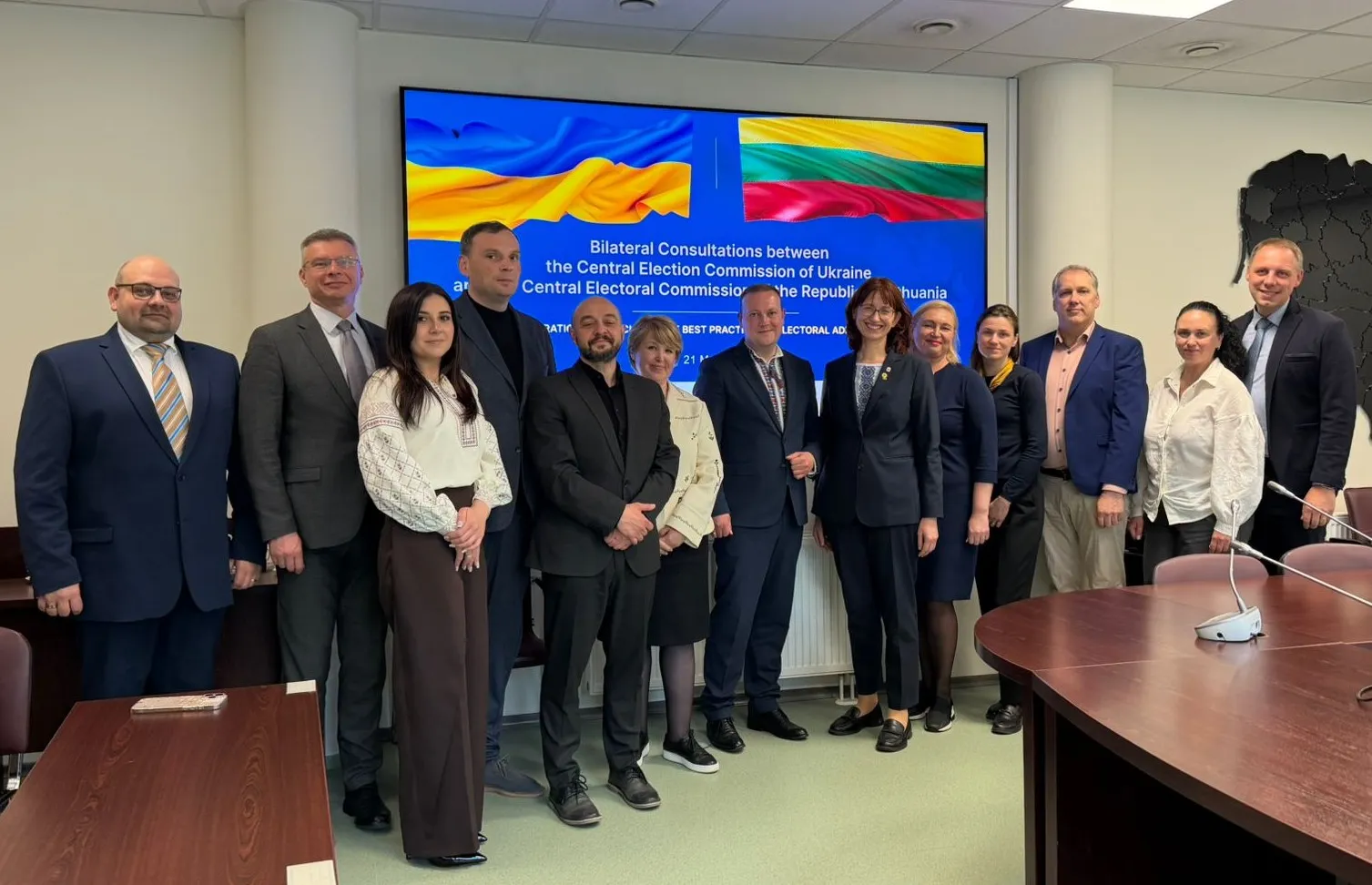
Ukraine is advancing preparations for future post-war elections by examining how Baltic countries manage voting abroad, election security and democratic resilience. Representatives of Ukraine’s Central Election Commission and Ministry of Foreign Affairs carried out consultative visits to Estonia and Lithuania from 18 to 22 May 2026, with participation from Ukrainian embassies in both countries. The visits were organized with European Union financial support under the INSPIRE UA project, implemented by International IDEA.
The consultations aimed to help Ukraine identify practical, legal and institutional solutions for enabling millions of Ukrainians living abroad to participate in future elections once conditions allow voting to take place. The discussions focused on out-of-country voting, election administration, public trust, digital tools and safeguards against disinformation.
In Tallinn, the Ukrainian delegation met with the Estonian State Electoral Office, the Ministry of Foreign Affairs, experts from the University of Tartu and representatives of the Ukrainian community in Estonia. Estonian officials shared their experience in administering voting abroad through diplomatic missions, postal voting and internet voting, while also outlining the legal and technical safeguards behind these systems.
The Estonian meetings also addressed cooperation between election authorities, diplomatic institutions and local authorities. Strategic communication, countering disinformation, foreign information manipulation and interference were among the key topics discussed. A dedicated session with University of Tartu expert Dr. Mihkel Solvak explored Estonia’s more than two decades of experience with internet voting and the importance of public confidence in digital electoral tools.
In Vilnius, the Ukrainian delegation met with Lithuania’s Ministry of Foreign Affairs, Central Electoral Commission, Police Department under the Ministry of the Interior and Vilnius Municipality. Lithuanian counterparts presented their whole-of-government approach to election administration, including coordination between electoral bodies, diplomatic institutions, police and municipal authorities. The meetings also covered election security, public order and protection of electoral processes against disinformation and foreign interference.
A key outcome of the visit was the signing of a Memorandum of Understanding between the Central Election Commission of Ukraine and the Central Electoral Commission of Lithuania. The agreement strengthens cooperation in election administration, cybersecurity, countering disinformation and democratic resilience.
Meetings with Ukrainian communities in Tallinn and Vilnius also provided a platform to discuss practical challenges related to future electoral participation abroad. Topics included possible polling station locations, suitable venues, recruitment and training of election commission members, voter education, communication channels and cooperation between diaspora organizations, Ukrainian institutions and host-country authorities.
Through the INSPIRE UA project, International IDEA continues to support exchanges between Ukrainian and European institutions. These efforts are designed to ensure that international experience contributes to Ukraine’s future democratic processes and strengthens the meaningful participation of Ukrainians abroad.