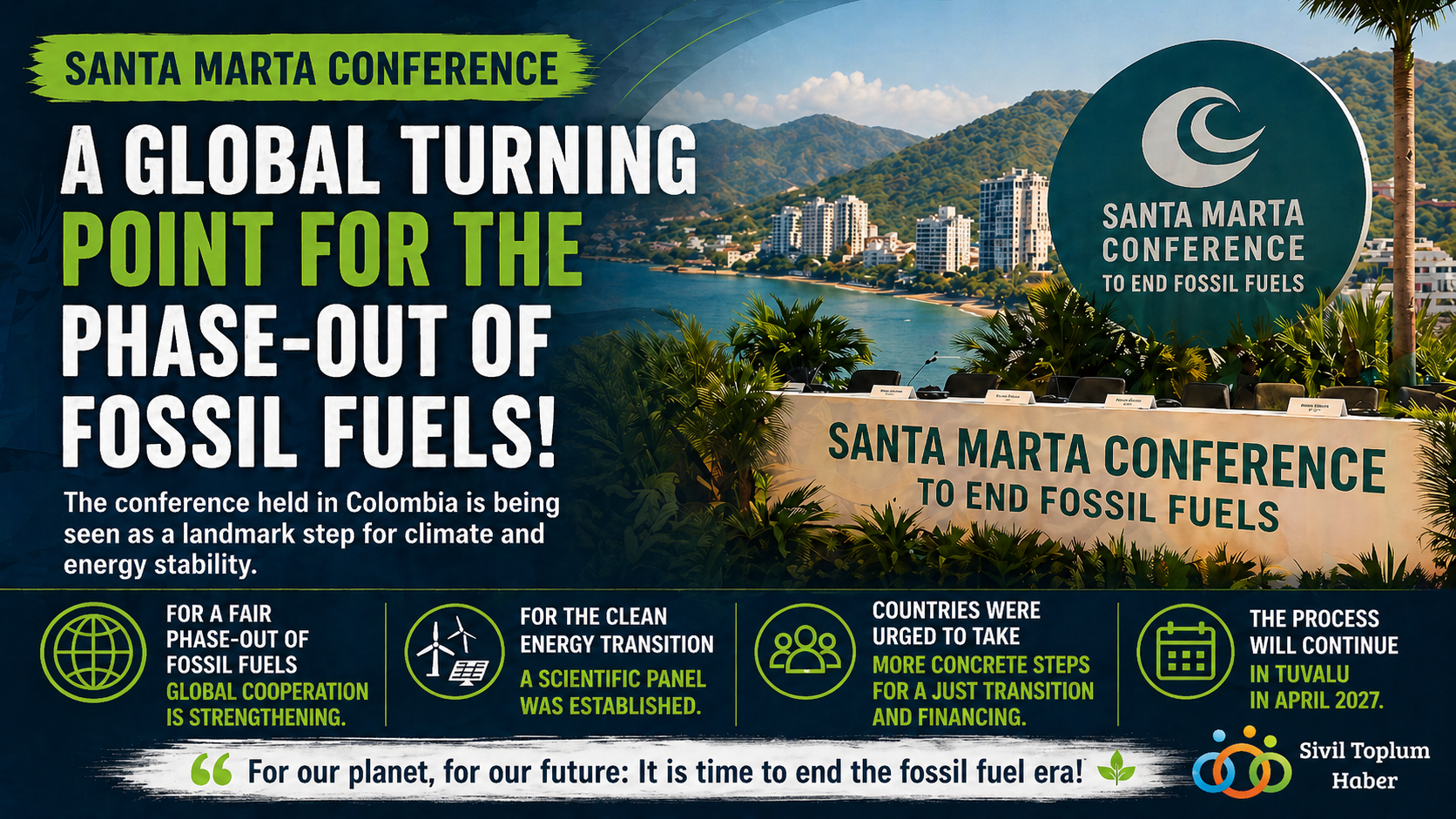
The Santa Marta Conference to End Fossil Fuels, held in Colombia, has been described as a significant milestone for global climate action and energy stability. The conference brought together countries, civil society representatives, experts and climate advocates to discuss how the world can move away from coal, oil and gas in a fair, fast and coordinated way.
Hosted by Colombia and the Netherlands, the conference focused on accelerating the global transition from fossil fuels while ensuring that the process protects communities, workers and developing economies. Discussions highlighted the need for stronger international cooperation, climate finance, scientific guidance and concrete national action plans.
One of the key outcomes of the conference was the announcement of a Global Energy Transition Scientific Panel, which is expected to provide science-based guidance for governments and decision-makers. The panel aims to support countries in designing effective policies for clean energy transition and fossil fuel phase-out.
Greenpeace International welcomed the conference as an important step for climate and energy security, while emphasizing that political momentum must now be turned into concrete action. The organization called on governments to move beyond promises and develop clear implementation plans supported by fair financing mechanisms.
The conference also underlined the importance of a just transition, particularly for Global South countries facing debt pressure, investment needs and social challenges. Participants stressed that ending dependence on fossil fuels requires not only environmental commitment but also economic planning, worker protection and international solidarity.
The process is expected to continue with the next conference, which will be co-hosted by Tuvalu and Ireland in April 2027. The upcoming meeting is expected to build on the Santa Marta momentum and push countries toward stronger commitments for a fossil-free future.